
There are some recipes that just stick with you, and these Spicy Gochujang Eggs are exactly that. The sauce is deep red, glossy, and just the right kind of fiery. It takes maybe 20 minutes from start to finish, and somehow it tastes like you spent a lot more effort than that. If you love bold savoury food and good eats that actually deliver, this one earns a permanent spot in your rotation.
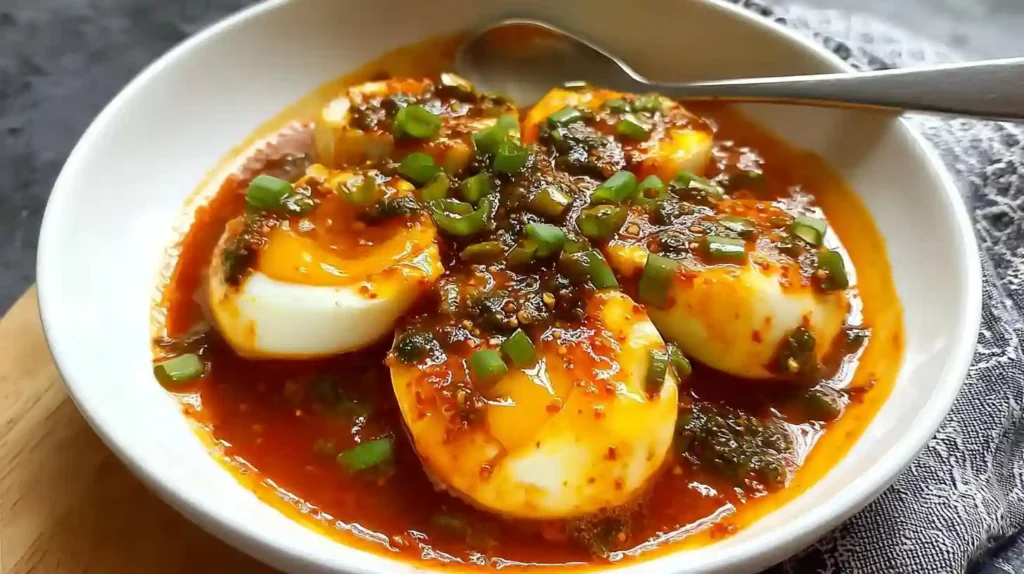
Gochujang is a Korean fermented chili paste with this complex, almost smoky heat that regular hot sauce just cannot replicate. Combined with a few pantry staples, it transforms ordinary eggs into something that feels entirely new. Whether you eat it for breakfast, a late lunch, or a light dinner, this dish fits. That is one of the things that makes it one of those diy food recipes worth keeping around.
What You Need for Spicy Gochujang Eggs
The ingredient list is short, which is part of why this works so well as a weeknight go-to. You likely have most of this already.
- 4 large eggs
- 2 tablespoons gochujang paste
- 1 tablespoon soy sauce
- 1 teaspoon sesame oil
- 1 teaspoon honey or maple syrup
- 2 garlic cloves, minced
- 1 tablespoon neutral oil (vegetable or avocado)
- 2 tablespoons water
- 2 green onions, thinly sliced
- 1 teaspoon sesame seeds
- Steamed rice, for serving
How to Make Spicy Gochujang Eggs Step by Step
This comes together quickly, so have everything measured and ready before you start cooking. The sauce goes from raw to beautifully caramelized fast.
- In a small bowl, whisk together the gochujang, soy sauce, sesame oil, honey, and water until smooth. Set aside.
- Heat a non-stick skillet over medium heat. Add the neutral oil.
- Once the oil shimmers, add the minced garlic. Stir for about 30 seconds until fragrant, not browned.
- Pour the gochujang sauce into the pan. Let it simmer for one minute, stirring occasionally.
- Crack the eggs directly into the sauce, spacing them evenly. Reduce heat to medium-low.
- Cover with a lid and cook for 3 to 4 minutes, until the whites are fully set but the yolks are still soft.
- Remove from heat. Scatter green onions and sesame seeds on top.
- Serve immediately over warm rice.
Pro Tips for Getting It Right
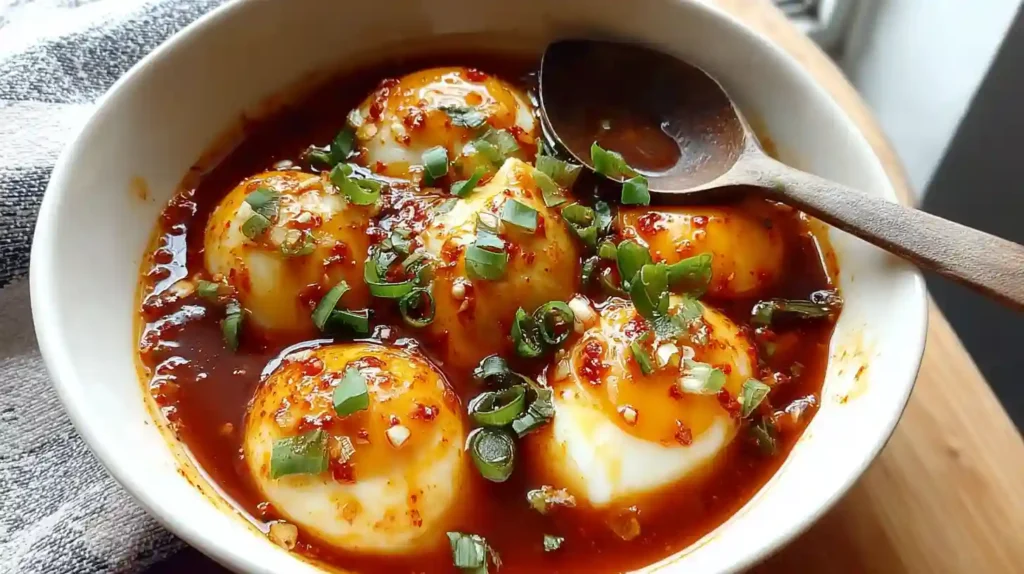
The biggest mistake people make is cooking this over too high a heat. Gochujang has natural sugars and it will scorch quickly if the flame is too strong. Keep it at medium or medium-low once the eggs go in. Also, covering the pan is non-negotiable, that steam is what sets the whites gently without flipping.
If you want the yolks fully cooked, just add an extra minute under the lid. For runny yolks, check at the 3-minute mark. The sauce also thickens as it cools, so serve this right away for the best texture and flavor.
Swaps and Substitutions That Actually Work
No gochujang? Sriracha mixed with a small amount of white miso paste gets surprisingly close. It won’t have the same depth, but it works well enough for a quick fix. For a lower-sodium version, use coconut aminos instead of soy sauce.
The honey can be swapped for brown sugar or agave without issue. If sesame oil is not available, a few drops of toasted sesame seeds stirred in at the end adds a similar nuttiness. This recipe is flexible, which makes it a reliable diy food staple across different pantry situations.
Variations Worth Trying
For a more filling version, add a handful of baby spinach or sliced mushrooms to the sauce before cracking in the eggs. They cook down quickly and add texture. If you are a fan of Asian dishes with a little more protein, stir in some crumbled firm tofu alongside the eggs.
Serving this over noodles instead of rice is another solid option, especially with a drizzle of chili oil on top. Some people add a soft-boiled egg on the side as well for more substance. These new recipes always taste better when you make them your own.
Storage and Leftover Notes
Honestly, this dish is best eaten fresh. The eggs continue cooking from residual heat and the texture changes once refrigerated. That said, the gochujang sauce on its own stores beautifully in a sealed jar for up to a week. You can make a bigger batch of the sauce and use it throughout the week over fried eggs, roasted vegetables, or grain bowls.
If you do have leftovers, reheat them gently in a covered pan with a splash of water over low heat. Avoid the microwave if you can, the eggs turn rubbery fast. This is one of those food dishes that rewards a little patience even when reheating.
FAQ
Is gochujang very spicy?
It has a medium heat level with a lot of depth. It is not as sharp as raw chili. If you are heat-sensitive, start with one tablespoon instead of two and taste before adding more.
Can I use this sauce on other things?
Yes, absolutely. It works great on roasted sweet potatoes, grilled chicken, or even as a dipping sauce for dumplings. It is one of those Asian recipes where the sauce becomes the real star.
What kind of pan works best?
A non-stick skillet or a well-seasoned cast iron pan both work well. You want even heat distribution so the sauce simmers uniformly around the eggs.
Can I make this dairy-free and gluten-free?
This recipe is naturally dairy-free. For gluten-free, use tamari instead of soy sauce and double-check that your gochujang brand is certified gluten-free, as some contain wheat.
How do I keep the egg whites from sticking to the pan?
Make sure the oil is properly heated before adding the sauce, and use a pan with a reliable non-stick surface. Also, do not try to move the eggs once cracked in. Let them set undisturbed and they will release cleanly.
Spicy Gochujang Eggs

Equipment
- Non-stick skillet
- Small mixing bowl
- Lid for skillet
Ingredients
- 4 large eggs
- 2 tablespoons gochujang paste
- 1 tablespoon soy sauce or tamari for gluten-free
- 1 teaspoon sesame oil
- 1 teaspoon honey or maple syrup
- 2 garlic cloves minced
- 1 tablespoon neutral oil vegetable or avocado oil
- 2 tablespoons water
- 2 green onions thinly sliced
- 1 teaspoon sesame seeds
- steamed rice for serving
Instructions
- Mix the sauce: In a small bowl, whisk together the gochujang, soy sauce, sesame oil, honey, and water until smooth. Set aside.
- Heat the pan: Warm a non-stick skillet over medium heat and add the neutral oil.
- Cook the garlic: Add the minced garlic and stir for 30 seconds until fragrant, not browned.
- Add the sauce: Pour the gochujang mixture into the pan and let it simmer for 1 minute, stirring gently.
- Crack in the eggs: Carefully crack the eggs directly into the sauce, spacing them apart. Reduce heat to medium-low.
- Cover and cook: Place a lid on the pan and cook for 3 to 4 minutes, until whites are set and yolks are still slightly runny.
- Garnish and serve: Remove from heat, top with green onions and sesame seeds, and serve immediately over warm steamed rice.
Notes
- Keep heat at medium or lower once the eggs go in – gochujang burns quickly due to its natural sugars.
- Make a larger batch of the sauce and store it in the fridge for up to one week.
- For fully cooked yolks, add one extra minute under the lid.
- Use tamari and certified gluten-free gochujang for a fully gluten-free version.