There’s something undeniably romantic about sitting down to a bowl of creamy lobster pasta. The first forkful hits you with that perfect balance of sweet, tender lobster meat and rich, velvety sauce clinging to every strand of pasta. I remember making this for my anniversary last year, watching my partner’s eyes light up with that first bite. It’s the kind of seafood dinner that feels indulgent without being complicated.
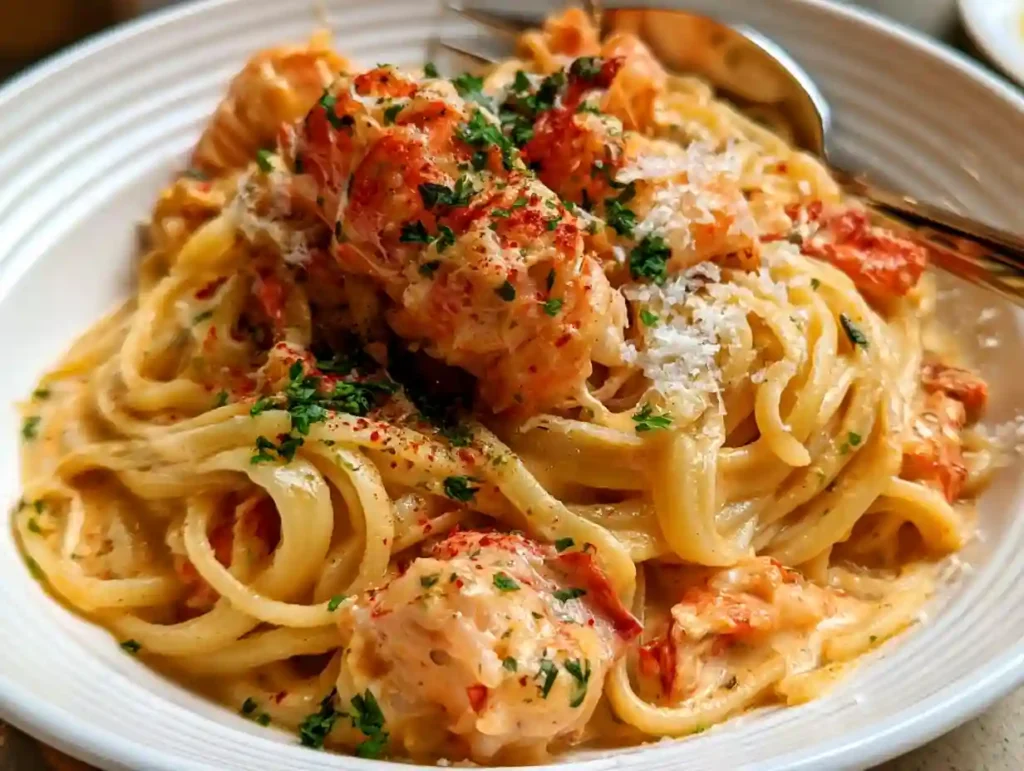
This creamy lobster pasta recipe brings restaurant-quality results right to your kitchen. Whether you’re planning a special date night or just craving a luxurious seafood pasta dish, this lobster pasta recipe delivers every time. The secret lies in building layers of flavor while keeping the lobster tender and the sauce silky smooth.
Why This Lobster Pasta Recipe Works for Seafood Dinner
What sets this apart from other lobster recipes is the technique. You sear the lobster just until opaque, then finish it gently in the cream sauce. This prevents that rubbery texture that ruins so many seafood dishes. The garlic and white wine create an aromatic base, while heavy cream and Parmesan build that luxurious body you expect from a proper seafood pasta.
I’ve tested this creamy lobster pasta countless times to get the timing right. The lobster should be pink and just cooked through, never overdone. Your pasta water is gold here, too. That starchy liquid helps the sauce cling beautifully to every bite, creating the kind of glossy finish you see in fancy restaurants.
Ingredients for Perfect Creamy Lobster Pasta
Quality matters with lobster pasta. Fresh or frozen lobster tails both work wonderfully. If using frozen, thaw overnight in the fridge for best texture. The cream should be heavy whipping cream, not half-and-half, to achieve that rich consistency without breaking.
- 1 pound lobster tails, shells removed and meat cut into 1-inch chunks
- 12 ounces linguine or fettuccine pasta
- 3 tablespoons unsalted butter, divided
- 2 tablespoons olive oil
- 4 cloves garlic, minced
- 1 small shallot, finely diced
- 1/2 cup dry white wine
- 1 1/2 cups heavy cream
- 3/4 cup freshly grated Parmesan cheese
- 1/4 teaspoon red pepper flakes
- Salt and freshly ground black pepper to taste
- 2 tablespoons fresh parsley, chopped
- 1 lemon, zested and juiced
How to Cook Lobster for This Seafood Pasta
Start by bringing a large pot of salted water to boil for your pasta. Cook according to package directions until al dente. Before draining, reserve about 1 cup of that starchy pasta water. This liquid is essential for adjusting your sauce consistency later.
While the pasta cooks, heat 1 tablespoon butter with the olive oil in a large skillet over medium-high heat. Season the lobster chunks with salt and pepper, then sear them for about 2 minutes per side until just opaque and slightly golden. Don’t overcrowd the pan. Remove the lobster to a plate immediately to prevent overcooking.
In the same skillet, add the remaining butter. Toss in the shallot and cook for 2-3 minutes until softened and fragrant. Add the minced garlic and red pepper flakes, stirring constantly for about 1 minute. You want that garlic aroma without letting it brown, which would make it bitter.
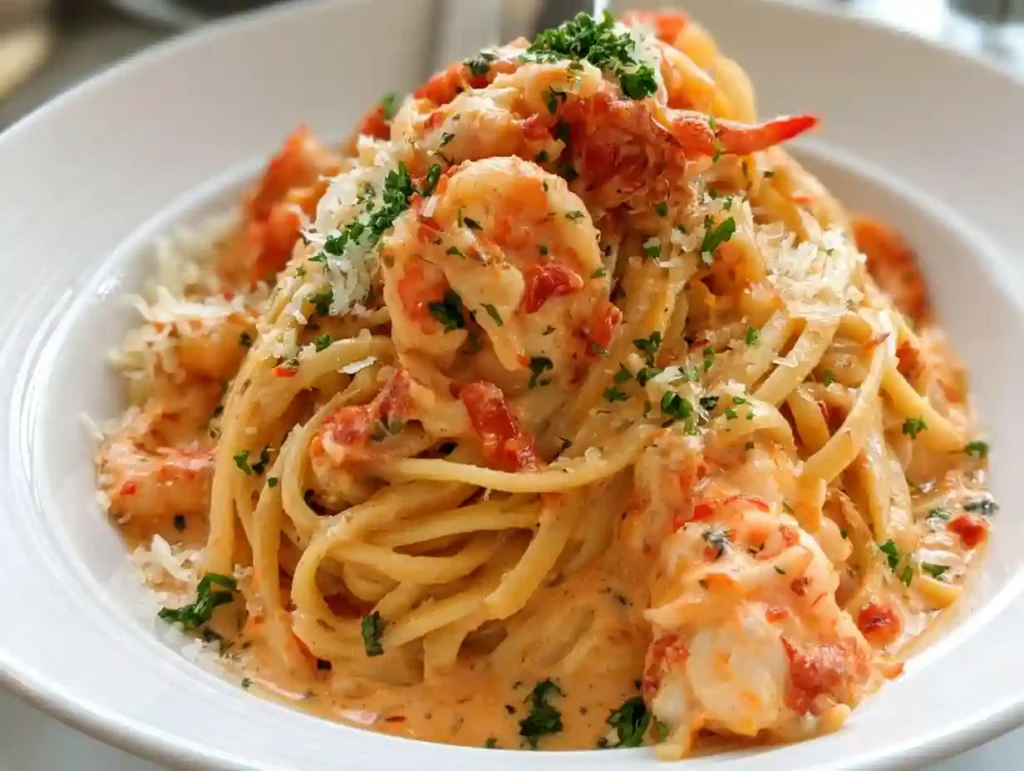
Building the Cream Sauce for Your Lobster Recipes
Pour in the white wine to deglaze the pan, scraping up any browned bits from the bottom. Let it simmer for 2-3 minutes until reduced by half. This concentrates the flavor and removes the raw alcohol taste.
Reduce heat to medium-low and stir in the heavy cream. Bring to a gentle simmer for 3-4 minutes until the sauce thickens enough to coat the back of a spoon. Whisk in the Parmesan cheese until completely melted and smooth. Season with salt, pepper, and lemon zest. The sauce should be rich but not too thick at this stage.
Add the drained pasta directly to the skillet with the cream sauce. Toss gently to coat, adding splashes of reserved pasta water as needed to reach your desired consistency. The sauce should cling to every strand without being gloopy. Fold in the cooked lobster chunks and lemon juice, heating through for just 1-2 minutes.
Pro Tips for Restaurant-Quality Seafood Dishes
- Pat lobster meat completely dry before searing for better browning
- Use freshly grated Parmesan, not pre-shredded, for smoother melting
- Never let cream sauce boil vigorously or it may curdle
- Reserve extra pasta water before draining, you’ll need it
- Add lobster at the very end to keep it tender
Variations on This Creamy Lobster Pasta
Make this recipe your own with these simple twists. Swap lobster for langostino tails or add shrimp for a mixed seafood pasta. Fresh cherry tomatoes blistered in the pan before adding the cream bring brightness and color. A handful of baby spinach wilted into the sauce adds nutrition without changing the flavor profile.
For a lighter version, use half cream and half pasta water, finishing with extra Parmesan for richness. Cajun seasoning instead of red pepper flakes creates a spicy kick. Fresh basil or chives work beautifully in place of parsley for different herb notes.
Troubleshooting Your Lobster Pasta Recipe
Sauce too thin? Simmer longer to reduce, or whisk in a cornstarch slurry. Too thick? Add more pasta water gradually until it loosens. Lobster turning rubbery means it cooked too long. Always remove it early and let residual heat finish the job.
If your cream sauce breaks or looks grainy, it likely got too hot. Remove from heat immediately and whisk in a splash of cold cream. Prevention is easier, so keep that heat at medium-low once cream goes in.
Ingredient Substitutions for Healthy Eating
No white wine on hand? Use chicken or seafood stock with a squeeze of lemon. Half-and-half works in place of heavy cream, though the sauce will be lighter. Frozen lobster meat is perfectly fine if fresh isn’t available. Just thaw properly and pat very dry.
Storage and Serving Suggestions for Seafood Dinner
This creamy lobster pasta is best enjoyed immediately. Leftovers keep in an airtight container in the fridge for up to 2 days. Reheat gently on the stovetop with splashes of cream or pasta water to restore the silky texture. The lobster won’t be quite as tender the next day, but still delicious.
Serve with crusty bread to soak up that amazing sauce. A crisp green salad with lemon vinaigrette balances the richness. Pair with the same white wine you used in cooking, like Pinot Grigio or Sauvignon Blanc. This seafood pasta also pairs beautifully with roasted asparagus or garlic bread.
Frequently Asked Questions About Lobster Pasta
Can I use frozen lobster for this creamy lobster pasta?
Absolutely. Frozen lobster tails work great. Thaw overnight in the refrigerator and pat completely dry before cooking for best results.
What pasta shape works best for lobster recipes?
Linguine and fettuccine are traditional choices. Their flat surfaces hold the cream sauce beautifully. Spaghetti or angel hair also work if that’s what you have.
How do I prevent the cream sauce from breaking?
Keep heat at medium-low once cream is added. Never let it boil rapidly. Fresh Parmesan melts more smoothly than pre-shredded varieties.
Can I make this seafood pasta ahead of time?
It’s best fresh, but you can prep ingredients ahead. Cook pasta and lobster separately, then combine with sauce when ready to serve for optimal texture.
Is there a way to make this lobster pasta recipe healthier?
Use half cream and half pasta water, add vegetables like spinach or tomatoes, and control portion sizes. The protein from lobster makes it satisfying even with less cream.
What wine pairs best with creamy lobster pasta?
A crisp white wine like Pinot Grigio, Sauvignon Blanc, or unoaked Chardonnay complements the rich sauce without overwhelming the delicate lobster flavor.
How long does lobster pasta keep in the refrigerator?
Store leftovers in an airtight container for up to 2 days. Reheat gently with added liquid. The texture is best on day one, so plan accordingly for your seafood dinner.
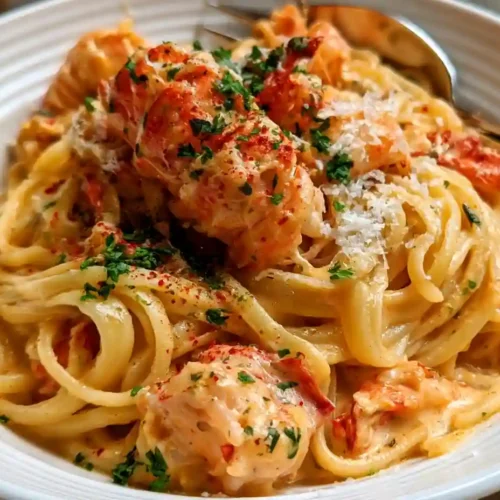
Creamy Lobster Pasta

Equipment
- Large skillet
- Large pot for pasta
- Chef’s Knife
- Cutting Board
- Wooden spoon or tongs
Ingredients
- 1 pound lobster tails, shells removed and meat cut into 1-inch chunks fresh or frozen and thawed
- 12 ounces linguine or fettuccine pasta
- 3 tablespoons unsalted butter, divided
- 2 tablespoons olive oil
- 4 cloves garlic, minced
- 1 small shallot, finely diced
- 1/2 cup dry white wine
- 1 1/2 cups heavy cream
- 3/4 cup freshly grated Parmesan cheese
- 1/4 teaspoon red pepper flakes optional
- to taste salt and freshly ground black pepper
- 2 tablespoons fresh parsley, chopped for garnish
- 1 lemon, zested and juiced
Instructions
- Bring a large pot of salted water to boil. Cook linguine or fettuccine pasta according to package directions until al dente. Before draining, reserve about 1 cup of starchy pasta water.
- While pasta cooks, heat 1 tablespoon butter with olive oil in a large skillet over medium-high heat. Season lobster chunks with salt and pepper, then sear for 2 minutes per side until just opaque and slightly golden. Remove to a plate immediately.
- Add remaining butter to the same skillet. Toss in diced shallot and cook for 2-3 minutes until softened. Add minced garlic and red pepper flakes, stirring constantly for 1 minute until fragrant but not browned.
- Pour in white wine to deglaze the pan, scraping up browned bits. Simmer for 2-3 minutes until reduced by half.
- Reduce heat to medium-low and stir in heavy cream. Bring to a gentle simmer for 3-4 minutes until sauce thickens enough to coat the back of a spoon. Whisk in Parmesan cheese until melted and smooth. Season with salt, pepper, and lemon zest.
- Add drained pasta to the skillet with cream sauce. Toss gently to coat, adding splashes of reserved pasta water as needed to reach desired consistency.
- Fold in cooked lobster chunks and lemon juice, heating through for 1-2 minutes. Garnish with fresh parsley and serve immediately.
Notes
- Pat lobster meat completely dry before searing for better browning
- Use freshly grated Parmesan for smoother melting
- Never let cream sauce boil vigorously or it may curdle
- Reserve extra pasta water before draining
- Add lobster at the very end to keep it tender