Garlic Shrimp Mofongo is one of those dishes that sounds fancy but is genuinely manageable on a weeknight. It comes from Puerto Rico, built around fried green plantains that get mashed with garlic and pork fat, then piled high with garlicky, buttery shrimp. The result is bold, hearty, and packed with layers of flavor you just don’t get from everyday pasta or rice dinners. If you’ve been looking for a real recipe for mofongo that doesn’t cut corners, this is it.
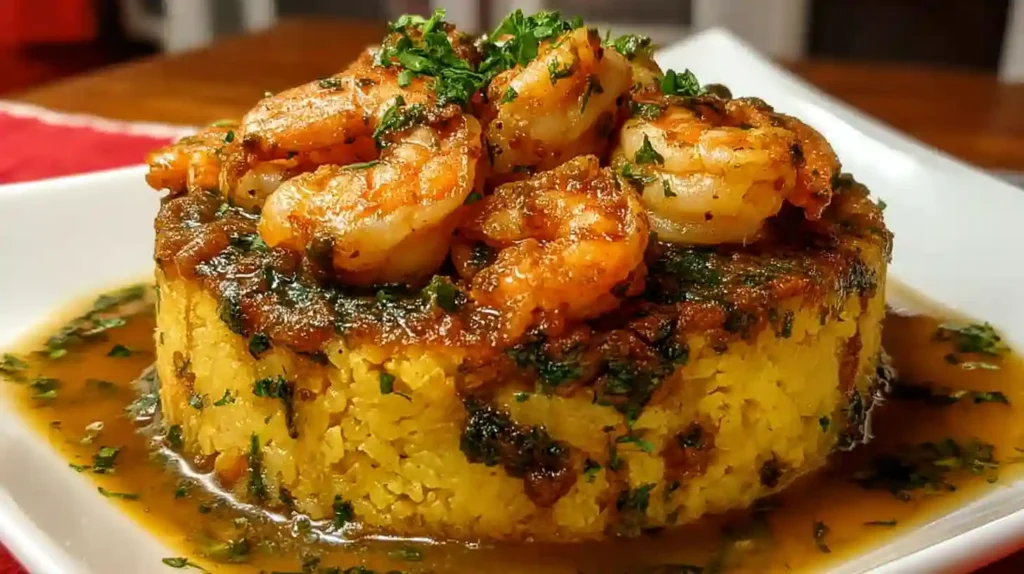
The texture contrast alone makes it memorable – crispy outside, dense and savory inside, with juicy shrimp soaking into every bite. It’s become one of my favorite non red meat dinner ideas because it feels indulgent without being heavy. The shrimp cook fast, the mashing is almost therapeutic, and the whole thing comes together in about 30 minutes.
What You Need to Make Garlic Shrimp Mofongo
Green plantains are non-negotiable here. Yellow or ripe ones will be too sweet and won’t hold their shape when mashed. For the shrimp, medium to large work best since they stay juicy and don’t disappear into the mofongo. You’ll need real garlic, not powder, because the flavor is the whole point.
- 3 green plantains, peeled and sliced into 1-inch rounds
- 1 lb large shrimp, peeled and deveined
- 6 cloves garlic, minced (divided)
- 3 tbsp olive oil, divided
- 2 tbsp unsalted butter
- 1/4 cup chicken or seafood broth
- 1/4 cup chicharrones (fried pork rinds), crushed – optional but traditional
- Salt and black pepper to taste
- Fresh cilantro for garnish
- Vegetable oil for frying plantains
How to Build Your Garlic Shrimp Mofongo Step by Step
Start by frying the plantain slices in about an inch of vegetable oil over medium heat. You want them golden and cooked through, not deeply brown, roughly 3 to 4 minutes per side. Pull them out and let them drain on paper towels for a minute. While they’re still warm, transfer to a pilon (wooden mortar) or a sturdy bowl and add half the minced garlic, 1 tablespoon of olive oil, salt, and the crushed chicharrones if using. Mash everything together firmly until you get a cohesive, moldable texture – not smooth, slightly chunky is correct.
For the shrimp, heat butter and the remaining olive oil in a skillet over medium-high. Add the rest of the garlic and cook for about 45 seconds until fragrant. Add the shrimp in a single layer, season with salt and pepper, and cook 2 minutes per side. Pour in the broth and let it reduce slightly, about 1 minute. That light sauce is what keeps the dish from feeling dry.
Shape the mofongo into a mound or press it into a small bowl to form a dome, then invert it onto a plate. Spoon the shrimp and all that garlicky broth right over the top.
Pro Tips for Getting the Texture Right
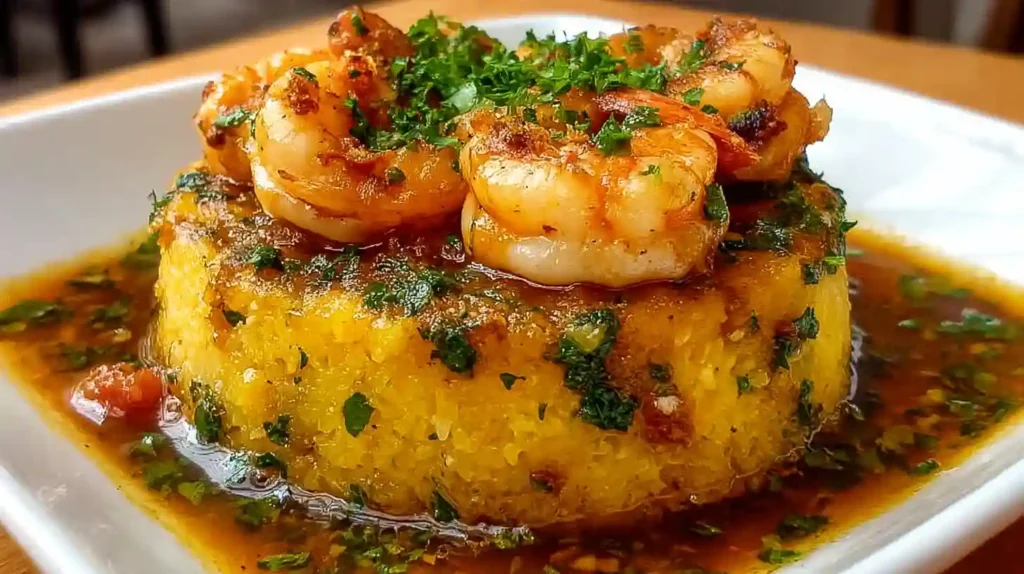
Mash while the plantains are still hot – this is probably the biggest mistake people make. Once they cool down, they get stiff and won’t bind properly. If your mofongo feels too dry while mashing, add a splash of warm broth or a tiny drizzle of olive oil. Don’t add water, it dulls the flavor. Press the finished mound together firmly so it holds its shape when you plate it.
Swaps and Variations Worth Trying
This dish is flexible in good ways. For a pescatarian-friendly version with no pork, skip the chicharrones and add an extra tablespoon of olive oil to the mash. It still tastes great. If you want to explore mofongo with shrimp in a lighter direction, use half the butter and add a squeeze of lime to the shrimp at the end – it brightens everything up nicely.
As one of the more adaptable seafood main dishes in Caribbean cooking, mofongo also works with scallops or a mix of shrimp and fish. You could even go fully plant-based by replacing the shrimp with sautéed mushrooms and using vegetable broth – the garlic-forward base still carries the dish.
Storing Leftovers Without Losing Quality
Mofongo is honestly best eaten right away – it firms up as it cools and doesn’t reheat exactly the same. If you do have leftovers, store the mofongo and shrimp separately in airtight containers in the fridge for up to 2 days. To reheat, add a splash of broth to the mofongo and warm it covered in the microwave or in a small pan on low heat. The shrimp just need 60 seconds in a skillet, anything longer and they turn rubbery.
Troubleshooting Common Mofongo Problems
If your mofongo falls apart on the plate, the plantains probably weren’t fried long enough – they need to be fully cooked through, not just surface-golden. If the flavor feels flat, you likely need more salt and more garlic in the mash itself, not just in the shrimp. If the shrimp taste rubbery, they were overcooked – 2 minutes per side is plenty for large shrimp, and the residual heat from the broth does the rest.
FAQ
Can I use ripe plantains instead of green ones?
No – ripe plantains are too sweet and too soft for mofongo. The starchy firmness of green plantains is what gives the dish its structure and savory flavor. Using yellow plantains will give you something closer to a sweet mash, which changes the dish entirely.
Is this a good recipe for pescatarian dinners?
Absolutely. Garlic shrimp mofongo is one of the most satisfying dinner recipes pescatarian eaters can add to their rotation. Skip the pork rinds, keep everything else the same, and it’s fully pescatarian-friendly without losing any of the big garlic flavor.
What does mofongo taste like if you’ve never tried it?
Think of it as a savory, dense, garlicky mash – somewhere between fried plantains and stuffing, with a slightly crispy edge if you shape it while it’s still hot. It’s filling, earthy, and nothing like mashed potatoes even though the texture has a passing similarity.
Can I make the mofongo ahead of time?
You can fry and mash the plantains up to an hour ahead and keep them covered. Just reheat with a little broth before shaping and serving. Cook the shrimp fresh right before eating – they only take about 5 minutes and taste much better when just made.
What can I serve alongside this dish?
A light salad or simple sliced avocado works well since the mofongo itself is already rich and filling. Some people serve it with a small cup of extra broth on the side for dipping, which is very traditional. Keep the sides simple so the mofongo stays the focus of the meal.
Garlic Shrimp Mofongo

Equipment
- Deep skillet or small pot (for frying)
- Pilon or large mortar and pestle
- Cast iron skillet or sauté pan
Ingredients
- 3 green plantains, peeled and sliced into 1-inch rounds
- 1 lb large shrimp, peeled and deveined
- 6 cloves garlic, minced (divided)
- 3 tbsp olive oil, divided
- 2 tbsp unsalted butter
- 1/4 cup chicken or seafood broth
- 1/4 cup chicharrones (fried pork rinds), crushed optional but traditional
- salt and black pepper to taste
- fresh cilantro for garnish
- vegetable oil for frying plantains
Instructions
- Fry the plantains in about 1 inch of vegetable oil over medium heat, 3 to 4 minutes per side until golden and cooked through. Drain on paper towels.
- Mash while hot – transfer plantains to a pilon or sturdy bowl with half the garlic, 1 tbsp olive oil, salt, and crushed chicharrones if using. Mash firmly until the mixture holds together but stays slightly chunky.
- Cook the shrimp by heating butter and remaining olive oil in a skillet over medium-high heat. Add remaining garlic and cook 45 seconds until fragrant.
- Add shrimp in a single layer, season with salt and pepper, and cook 2 minutes per side. Pour in broth and let reduce for 1 minute.
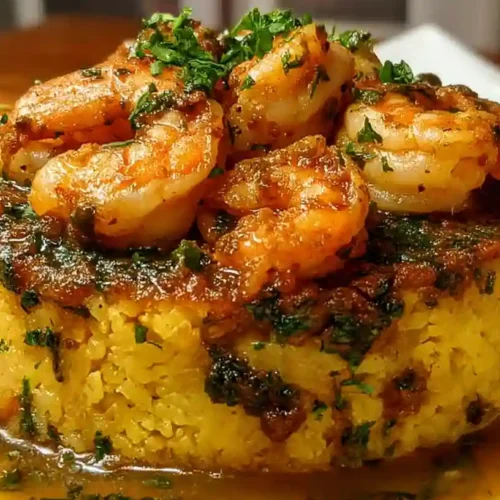
- Shape and serve – press mofongo into a small bowl to form a dome, then invert onto each plate. Spoon shrimp and broth generously over the top. Garnish with fresh cilantro.
Notes
- Always mash plantains while still hot – they become stiff and unworkable as they cool.
- If the mash feels too dry, add a small splash of warm broth, not water.
- For a pescatarian version, skip the chicharrones and add an extra drizzle of olive oil.
- Store mofongo and shrimp separately in the fridge for up to 2 days.