
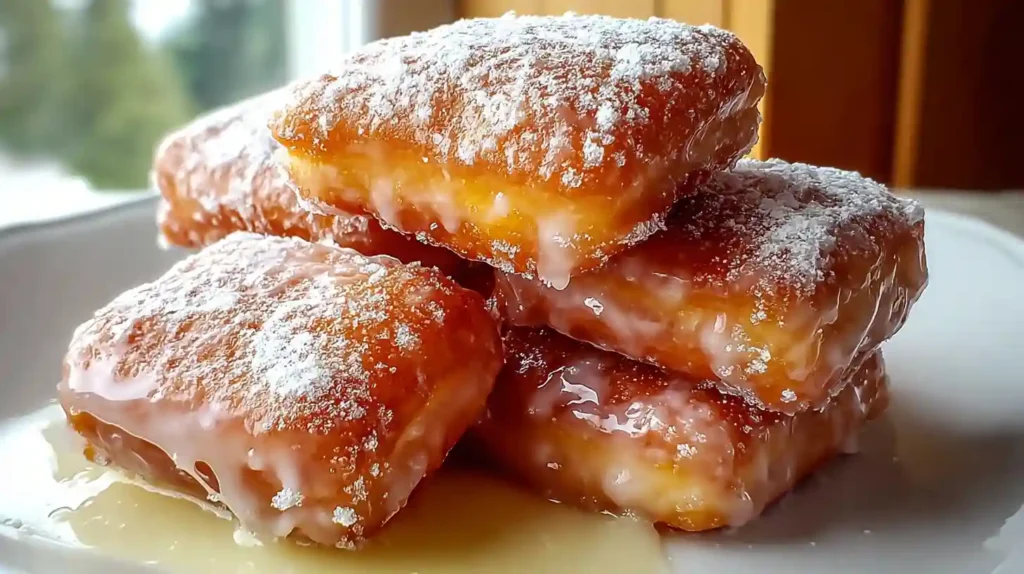
There is something quietly satisfying about pulling a batch of hot, golden beignets from the oil and watching the glaze set as they cool. This Glazed Buttermilk Beignet Square recipe takes the classic deep-fried dough and gives it a slightly more structured, bakery-style shape – same soft interior, same crackly-sweet finish, just a little more intentional. Buttermilk keeps the dough tender and adds a faint tang that balances the sweetness of the glaze beautifully.
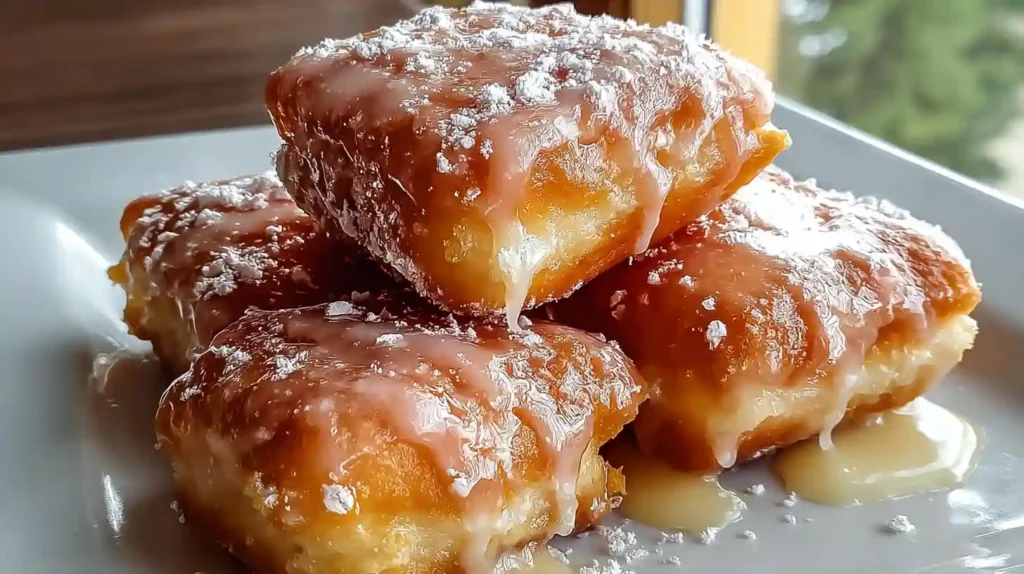
If you have been looking for recipes with buttermilk baking that actually go beyond pancakes, this is a good place to start. The dough is yeast-leavened, which means a little patience is required, but the process itself is very hands-off. Most of the work happens while the dough rests.
Ingredients for Glazed Buttermilk Beignet Square
- 2 1/4 tsp active dry yeast (one standard packet)
- 1/4 cup warm water (about 110°F)
- 3/4 cup buttermilk, room temperature
- 3 tbsp granulated sugar
- 1 large egg
- 2 tbsp unsalted butter, melted
- 1/2 tsp salt
- 2 3/4 cups all-purpose flour, plus extra for dusting
- Neutral oil for frying (canola or vegetable)
For the Pastry Glaze
- 1 1/2 cups powdered sugar, sifted
- 3 to 4 tbsp whole milk or buttermilk
- 1/2 tsp vanilla extract
How to Make Your Glazed Buttermilk Beignet Square Step by Step
- Dissolve the yeast in warm water with a pinch of sugar. Let it sit for 5 to 8 minutes until foamy.
- In a large bowl, whisk together the buttermilk, sugar, egg, melted butter, and salt. Pour in the yeast mixture and stir to combine.
- Add the flour gradually, mixing until a soft dough forms. It will be slightly sticky – that is normal.
- Knead the dough on a lightly floured surface for about 5 minutes until smooth and elastic. Shape into a ball, place in a lightly oiled bowl, cover with plastic wrap, and let it rise for 1 hour or until doubled.
- Punch down the dough and roll it out on a floured surface to about 1/2 inch thickness. Cut into 2-inch squares using a sharp knife or bench scraper.
- Place the cut squares on a parchment-lined tray, cover loosely, and let them rest for 20 to 30 minutes.
- Heat 2 to 3 inches of oil in a heavy pot to 360°F. Fry the squares in small batches, about 1 to 2 minutes per side, until deep golden brown. Do not crowd the pan.
- Drain on a wire rack set over paper towels.
- While the beignets are still warm, whisk together the glaze ingredients until smooth and drizzle generously over each square.
Pro Tips for Texture and Timing
Oil temperature is everything here. Too low and the beignets absorb grease and turn heavy. Too high and the outside browns before the inside cooks through. Keep a thermometer in the pot and adjust the heat between batches. Frying is one of those yeast recipes baking desserts situations where rushing the temperature control always shows up in the final result.
Also, do not skip the second rest after cutting. Those 20 to 30 minutes allow the gluten to relax and the dough to puff slightly again, which gives you that open, airy crumb when you bite in.
Ingredient Substitutions That Actually Work
No buttermilk at home? You can make a quick substitute by adding 1 tablespoon of white vinegar or lemon juice to 3/4 cup of regular milk. Let it sit for 5 minutes before using. This trick works well for most baking with buttermilk recipes and keeps the dough tender without any sourness.
For baking recipes without milk entirely, try full-fat oat milk with a splash of vinegar. The dough will be slightly less rich, but it fries up nicely. Avoid watery plant milks like rice milk since they affect the dough texture noticeably.
Variations Worth Trying
The base dough is flexible. For a citrus-forward version, add 1 teaspoon of lemon zest and swap the vanilla in the glaze for fresh lemon juice. It brightens everything. If you want something closer to a classic New Orleans-style pastry, skip the glaze and go heavy with powdered sugar shaken on while still hot. Both are genuinely good options depending on your mood.
You can also add 1/2 teaspoon of cinnamon to the dough itself for a warmer flavor profile. This works especially well in fall and pairs nicely with a brown butter glaze instead of the standard vanilla one.
Troubleshooting Common Issues
If your dough is not rising, the yeast is likely the problem. Either the water was too hot (above 115°F kills the yeast) or the yeast was past its expiration date. Always proof your yeast first, and if it does not foam in 8 minutes, start over with a fresh packet.
Beignets turning out flat and dense usually means the dough was over-kneaded or the oil was too cool. A dense beignet is not unsalvageable – the flavor is still there – but the texture will be more bread-like than airy.
Storage and Serving
These are honestly best eaten within a few hours of frying. The glaze softens as they sit and the crust loses its slight crispness. If you need to store them, keep them in a single layer in an airtight container at room temperature for up to one day. Avoid refrigerating – it makes the dough rubbery.
To revive day-old beignets, place them on a baking sheet in a 325°F oven for 5 minutes. They will not be exactly like fresh, but they come back reasonably well. Serve them with coffee, hot chocolate, or a simple fruit compote on the side.
FAQ
Can I make the dough the night before?
Yes. After the first rise, punch down the dough, wrap it tightly, and refrigerate overnight. Let it come to room temperature for 30 minutes before rolling and cutting the next day.
What makes this the best beignet recipe for beginners?
The dough is forgiving and the technique is straightforward. No stand mixer is required, and the two-rise method is easy to manage around a normal schedule. Most first-time bakers get great results on the second try at most.
What to make with buttermilk besides this recipe?
Buttermilk is great in quick breads, waffles, fried chicken marinades, and layer cakes. It tenderizes proteins and adds a subtle tang. This recipe is one of the more interesting recipes with yeast baking that uses buttermilk specifically to enhance dough softness.
Can I bake these instead of frying?
You can, but the result is more like a soft dinner roll than a beignet. Frying creates the specific puffed, slightly crisp exterior that defines this pastry. Baking at 375°F for 12 to 14 minutes will work if frying is not an option, but manage expectations on texture.
How do I get the pastry glaze to set properly?
Drizzle the glaze while the beignets are still warm but not piping hot. Too hot and it runs off. Too cool and it does not adhere well. Let the glazed squares sit on a wire rack undisturbed for 10 minutes and the coating will set into a thin, slightly firm shell.

Glazed Buttermilk Beignet Square

Equipment
- Heavy pot or Dutch oven
- Candy thermometer
- Wire rack
- Rolling Pin
- Bench scraper or sharp knife
Ingredients
- 2 1/4 tsp active dry yeast one standard packet
- 1/4 cup warm water about 110°F
- 3/4 cup buttermilk room temperature
- 3 tbsp granulated sugar
- 1 large egg
- 2 tbsp unsalted butter melted
- 1/2 tsp salt
- 2 3/4 cups all-purpose flour plus extra for dusting
- neutral frying oil canola or vegetable, enough for 2-3 inches depth
- 1 1/2 cups powdered sugar sifted, for glaze
- 3-4 tbsp milk or buttermilk for glaze
- 1/2 tsp vanilla extract for glaze
Instructions
- Proof the yeast: Dissolve yeast in warm water with a pinch of sugar. Wait 5 to 8 minutes until foamy.
- Mix the wet ingredients: Whisk buttermilk, sugar, egg, melted butter, and salt together. Stir in the yeast mixture.
- Form the dough: Add flour gradually and mix until a soft, slightly sticky dough forms.
- Knead and rise: Knead for 5 minutes until smooth. Place in an oiled bowl, cover, and let rise for 1 hour until doubled.
- Shape: Punch down dough, roll to 1/2 inch thickness, and cut into 2-inch squares.
- Second rest: Place squares on parchment-lined tray, cover loosely, and rest for 20 to 30 minutes.
- Fry: Heat oil to 360°F. Fry in small batches, 1 to 2 minutes per side, until deep golden. Drain on a wire rack.
- Glaze: Whisk powdered sugar, milk, and vanilla until smooth. Drizzle over warm beignets and let set for 10 minutes.
Notes
- Keep oil at a steady 360°F between batches for even browning.
- Do not skip the second rest after cutting – it improves the interior texture significantly.
- Beignets are best eaten the same day. Reheat leftovers in a 325°F oven for 5 minutes.
- For a dairy-free version, use oat milk with 1 tbsp vinegar as a buttermilk substitute.